Skip to content
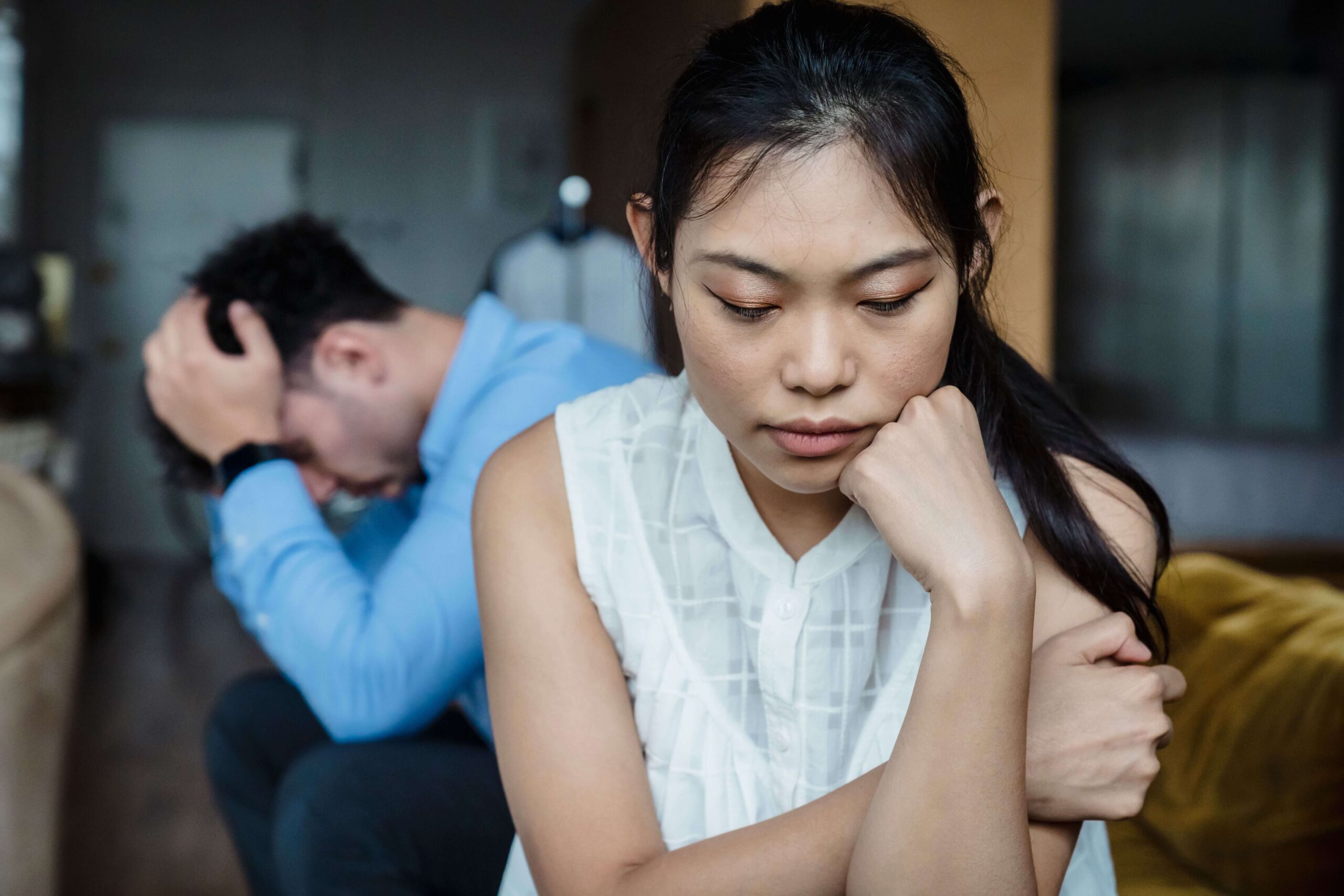
You want a better relationship. You’re open to getting help. But there’s this nagging fear you can’t shake:
- “If I go to couples therapy, are they just going to tell me I’m the problem?”
- “Will I have to become someone I’m not for this to work?”
- “Am I going to lose myself just to keep my partner happy?”
If you’re asking these questions and you’re in San Diego, CA, you’re not alone. Fear of “losing yourself” is one of the most common reasons people hesitate to start relationship counseling.
The Myth of Unconditional Love in Adult Relationships

Many of us have been quietly taught a story about love:
- Real love is unconditional.
- If someone truly loves you, they’ll accept you exactly as you are.
- If they ask you to change, it must mean you’re not enough.
This idea is powerful—and deeply misleading in adult relationships.
Unconditional love makes sense with infants and young children. A baby cannot earn or lose love. But in adult romantic partnerships, there are always conditions, whether we name them or not.
If you are abusing drugs, repeatedly cheating, physically harming your partner, or consistently violating their boundaries, it is completely reasonable—and emotionally healthy—for them to leave. Their decision to protect themselves does not mean they “never really loved you.” It means adult love exists alongside safety, respect, and basic trust.
In that sense, there are understandable, justifiable conditions in love. Not because love is fake, but because we are adults with legitimate needs, limits, and values.
When a Partner’s Request Feels Like an Attack on Who You Are
The confusion usually shows up in smaller, everyday ways. Your partner might say:
- “I need you to be more emotionally present.”
- “I need you to take my concerns seriously.”
- “I need you to help more with the kids or household.”
- “I need you to stop shutting down or raising your voice in conflict.”
On the surface, these are specific behaviors. But inside, they can land like:
- “You’re not good enough.”
- “Who you are is wrong.”
- “You have to become a different person to be loved.”
Why does it feel so big? Because what our partners ask us to change often brushes right up against long-standing beliefs we’ve held about ourselves and the world since childhood—beliefs shaped by parents, culture, religion, and early experiences.
Maybe you were taught that:
- “Real men don’t talk about feelings.”
- “Good women put everyone else first and never complain.”
- “Strong people handle their problems alone.”
- “Raised voices are normal; that’s just how families communicate.”
Now your partner, and maybe your couples therapist, are asking you to soften, to be vulnerable, to set boundaries, or to manage anger differently. On a deep level, that can feel like being asked to betray your family, your culture, or the version of yourself that got you this far. It’s no wonder your nervous system reacts with defensiveness, shutdown, or panic.
Two Histories, Two Worlds, One Relationship
Here’s a different way to see it.
Every couple is made of two people who, to a large extent, grew up in completely different emotional worlds. Different pasts. Different traumas. Different attachment styles. Different beliefs about money, conflict, affection, gender roles, sex, parenting—everything.
When you choose a partner, you’re not just choosing a person. You’re bringing together two entire life histories.
Of course, there will be friction. And of course, you will have different needs. Of course, you will both, at times, feel like the other person is speaking a foreign language.
Couples therapy, when it’s done well, is not about erasing you or forcing you into some generic “healthy” mold. It’s about helping two very different nervous systems learn how to coexist, adapt, and care for each other without either person disappearing.
Change vs. Disappearance: What Healthy Adaptation Actually Is

Healthy relationship change is not:
- “Become exactly who your partner wants.”
- “Abandon your values.”
- “Never make waves.”
Healthy relationship change sounds more like:
- “I learned to express anger without attacking.”
- “I learned to share more of my inner world without feeling weak.”
- “I still value independence, but I’ve made more room for partnership.”
- “I didn’t lose my culture or values; I updated how I live them in this relationship.”
From a psychological perspective, we are wired to gravitate toward what’s familiar—even if it’s not very healthy. If you grew up around emotional distance, chaos, or criticism, those patterns may feel “normal” in your body. A partner asking for more honesty, softness, boundaries, or accountability will feel unfamiliar and, therefore, threatening.
Relationship counseling in San Diego, CA, helps you slow this down. It names the old patterns, explores where they came from, and asks:
“Does this still serve me, my partner, and the relationship I actually want?”
If the answer is no, then change isn’t self-betrayal. It’s growth.
Why Requests for Change Trigger Procrastination and Avoidance
There’s another reason these conversations are so hard: most requests for change involve negative emotions—shame, fear, guilt, grief, or anxiety.
If you were never taught how to work with those emotions, your default may be to:
- Delay the hard talk.
- Numb out with work, screens, or substances.
- Say “I’ll try” but quietly avoid taking real steps.
This isn’t because you don’t care. It’s because your emotional toolbox is limited, and your brain is trying to dodge discomfort. In couples therapy at Stress Solutions, a big part of the work is expanding that toolbox—so you can face hard truths, tolerate your own emotions, and stay connected to yourself while also considering your partner’s needs.
What Relationship Counseling in San Diego, CA Is Really Aiming For
In my work as a couples therapist in San Diego, the goal is never to turn you into someone else. It’s to help you both:
- Understand how your histories and belief systems are shaping your current dynamic.
- Clarify what truly feels like “you” and what is actually old survival strategy.
- Negotiate changes that honor both partners’ needs and values.
- Build communication that allows for influence without coercion.
You are allowed to have boundaries. You are allowed to say, “I can’t change that core part of me,” and also, “I’m willing to experiment with doing things differently.”
Healthy love doesn’t demand that you lose yourself. It asks that both of you grow—sometimes in uncomfortable ways—so the relationship can become a place where two whole people can actually meet.
Ready to Explore Relationship Counseling in San Diego Without Losing Yourself?

If you’re in San Diego, CA, and you’re afraid couples therapy will erase who you are, it might be exactly the place to finally sort out which parts of you are truly “you,” and which parts are old pain, fear, or training you no longer want running the show.
You don’t have to choose between yourself and your relationship. Real change honors both.
At Stress Solutions, I provide relationship counseling in San Diego, CA, for couples who want to improve their relationship without sacrificing their identity, values, or personal goals.
Here are the next steps:
- Contact Stress Solutions at 619-881-0593 to schedule a free consultation for relationship counseling in San Diego, CA.
- Start couples therapy to explore relationship challenges, improve communication, and better understand each other’s needs.
- Learn how to create a stronger partnership while maintaining a healthy sense of self.
A fulfilling relationship shouldn’t require you to lose who you are. With the right support from a couples counselor, you can build a deeper connection while staying true to yourself.
Other Counseling Services Offered by Stress Solutions
Stress Solutions also helps individuals navigate a wide range of personal challenges. Additional services include therapy for anxiety, chronic stress, burnout, trauma, and men’s counseling.
Clients can meet in person at the San Diego office or participate in virtual therapy sessions from anywhere in California, Florida, or Oregon. Online counseling provides a convenient way to receive professional support while accommodating busy schedules and geographic flexibility.